← News
Digital Asset Trading Infrastructure for People and AI Agents
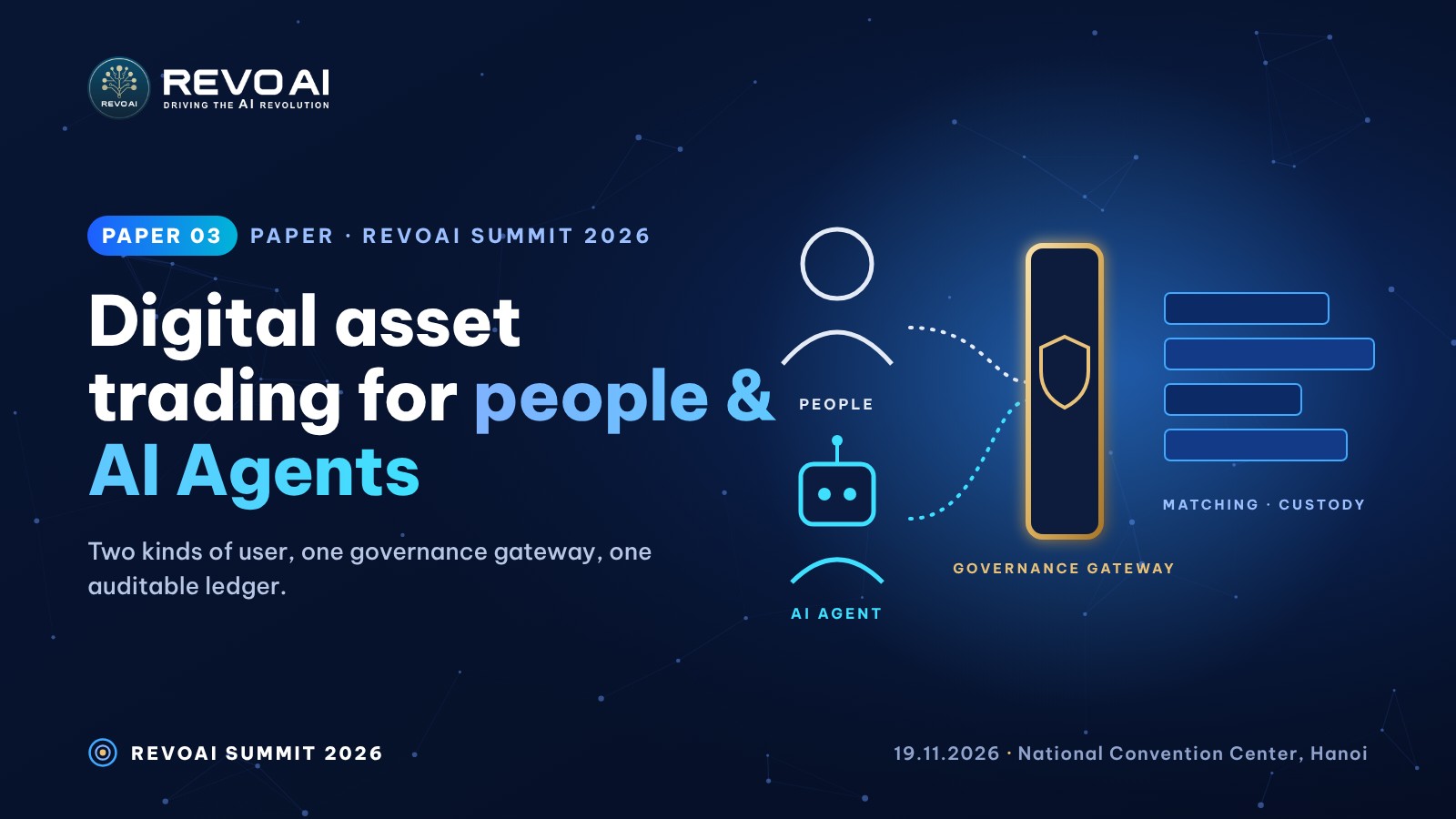
The next generation of trading will not only have buyers and sellers. It will also have AI agents trading on people's behalf, around the clock. DcapX is designed from the ground up for both kinds of user, not a traditional exchange with bots bolted on.
Technology achievements
The next generation of trading will not only have buyers and sellers. It will also have AI agents trading on people’s behalf, around the clock. DcapX is designed from the ground up for both kinds of user, not a traditional exchange with bots bolted on.
The agent economy has begun
A few years ago, “AI that goes shopping by itself” was still an idea. By 2025–2026 it had real infrastructure. The x402 payment protocol, initiated by Coinbase and now stewarded by a foundation under the Linux Foundation with names such as Cloudflare, Stripe and Visa involved, has processed hundreds of millions of AI-agent transactions. Google launched the AP2 protocol with major payment partners such as Mastercard and PayPal. McKinsey estimates that agentic commerce could influence trillions of dollars of global trade by 2030.
Payments are only the first step. Once AI agents can pay, the next step is holding and trading assets on behalf of their owners. The question is: which exchange is ready for that?
Why it cannot be “bolted on”
Today’s exchanges are designed for people: one account, one password, one person pressing the button. When a bot is plugged in through an API, the system cannot tell what it is allowed to do, how much it may spend, or who is responsible when it gets things wrong. Every constraint has to be patched on from outside.
DcapX takes the opposite approach: it treats AI Agents as a first-class type of user from the very first design.
Two kinds of user, one governance gateway
- People join through the interface, with identity verification (KYC) and a custodial wallet.
- AI Agents join through the API, carrying a signed “mandate”: what they may trade, their maximum budget, and the thresholds that require human approval.
Both must pass through the same governance gateway before an order reaches the matching layer. The owner can always revoke an agent’s authority instantly.
A three-layer architecture on RevoAIx
- Compliance layer. Performs KYC and KYA (Know Your Agent), anti-money-laundering checks and reporting, ready for the pilot crypto-asset market framework under Resolution 05/2025/NQ-CP.
- Agent governance layer. Gives each agent an identity, a mandate, a budget and approval thresholds, sharing the governance mechanism of the whole RevoAIx platform.
- Matching and custody layer. Runs on the deterministic ledger: each order is an immutable event with a cryptographic commitment, auditable down to the individual order.
Competitors can build each layer separately. Building all three, tightly bound on a single ledger and placed right at the intersection of agent technology and Vietnam’s new legal framework, is an entirely different problem.
A bridge to real assets
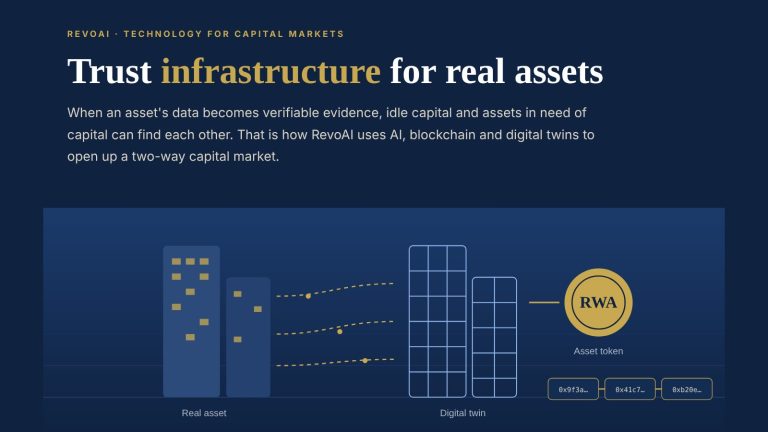
Trading infrastructure only matters when it serves the real economy. In the RevoAI ecosystem, DcapX is the link that connects capital holders with owners of real assets. Real-world asset tokenisation (RWA) and security token offerings (STO) are tools that help companies and projects access capital, rolled out step by step as the legal framework allows.
The message
When AI Agents become market participants, trust cannot rest on promises. It must rest on clear mandates, limited authority, audit trails and final human control. That is exactly what RevoAIx already has, and why DcapX is built on it.